122 จำนวนผู้เข้าชม |
22/05/2026
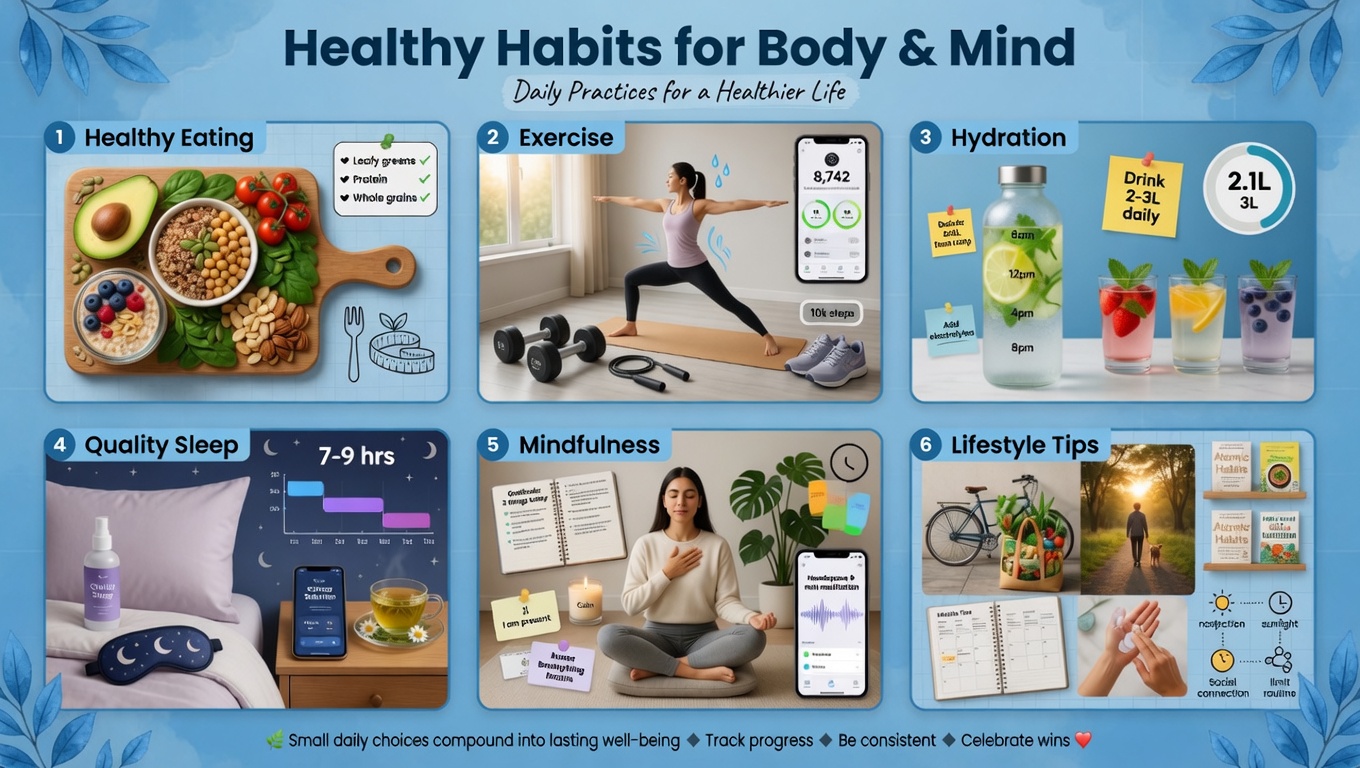
Living a healthy life does not require extreme changes. Simple habits made consistently every day — from what you eat and how you move, to how well you sleep and manage stress — can have a powerful impact on your physical health, mental well-being, and overall quality of life.
Eating breakfast helps kick-start your metabolism and gives your body energy for the day. It may also help prevent overeating later on. Studies suggest that people who eat a healthy breakfast often perform better at work or school. If you don't like heavy meals in the morning, even something small like fruit or a granola bar is better than skipping breakfast completely.
Planning meals ahead of time can help you save both time and money while making healthier choices. It also helps you stay in control of what you eat and avoid impulsive snacks or unhealthy fast food. Meal prepping can make it easier to reach goals like weight loss, reducing sugar intake, or increasing protein and nutrients. Having a clear meal plan also makes it easier to avoid unhealthy temptations during busy days.
Drinking enough water is important for almost every function in the body. Staying hydrated can improve energy levels, support digestion, and even help with weight control. Replacing sugary drinks with water may also lower the risk of obesity and type 2 diabetes. If plain water feels boring, adding fruits like lemon, orange, cucumber, or watermelon can make it more refreshing and enjoyable.
Instead of sitting for hours, take short breaks to move your body. Stretching, walking, or doing light exercises can improve circulation, reduce stress, and boost your mood. Even 30 minutes of walking a few times a week can support both mental and physical health. Small movement breaks throughout the day also make a difference and may help reduce fatigue from long periods of sitting.
Spending too much time on phones, emails, or social media can increase stress and reduce productivity. Taking breaks from screens allows you to focus on real-life activities such as reading, exercising, cooking, or spending time with family and friends. Reducing screen time can also improve sleep quality and mental well-being while creating more balance in daily life.
Learning new skills keeps your brain active and healthy. Activities like learning a language, dancing, writing, or playing music challenge the brain and may help slow age-related cognitive decline. Keeping your mind engaged can also improve memory, creativity, confidence, and overall mental sharpness as you age.
Smoking damages nearly every organ in the body and increases the risk of heart disease, stroke, and cancer. Quitting smoking is one of the best things you can do for your health. The body starts recovering quickly after quitting — heart rate and blood pressure begin improving within minutes, and long-term health risks gradually decrease over time.
Getting enough sleep is essential for both physical and mental health. Good sleep improves mood, concentration, memory, and learning ability. In the long term, quality sleep may lower the risk of heart disease and support healthy weight management. Experts generally recommend 7–9 hours of sleep per night, preferably on a consistent schedule.
Strength training helps build muscle mass and improve overall fitness. Having more muscle helps the body burn more calories, even while resting. Exercises like push-ups, lunges, and weight lifting can strengthen bones, improve heart health, and reduce body fat. Training at least twice a week is recommended for long-term strength and mobility.
Spending time outside in sunlight helps the body produce vitamin D, which is important for bones, the immune system, and mood. Being outdoors also encourages physical activity and may help reduce stress. Studies suggest that spending time in green spaces can promote calmness, relaxation, and better emotional well-being compared to crowded urban environments.
Good balance is important at every age. It helps younger people avoid injuries and helps older adults stay active and reduce the risk of falls. Activities like yoga, tai chi, and even regular walking can improve balance, coordination, muscle strength, and confidence while supporting better overall movement.
Mindfulness means focusing on the present moment, whether through meditation or simply paying attention to daily activities. Research shows that mindfulness may help reduce stress, improve mood, relieve pain, and support brain health. Regular mindfulness practices can also improve emotional control, memory, focus, and self-awareness over time.
Living a healthy life does not require extreme changes. Simple habits like eating well, staying active, sleeping enough, learning continuously, and managing stress can have a powerful impact over time. Small healthy choices made consistently every day can lead to better physical health, mental well-being, and overall quality of life.
Prepared by: ภญ. ปุณยนุช อังคะนาวิน
© 2026 Siammerx Co., Ltd
 TH
TH EN
EN CN
CN JAP
JAP AR
AR