160 จำนวนผู้เข้าชม |
05/06/2026
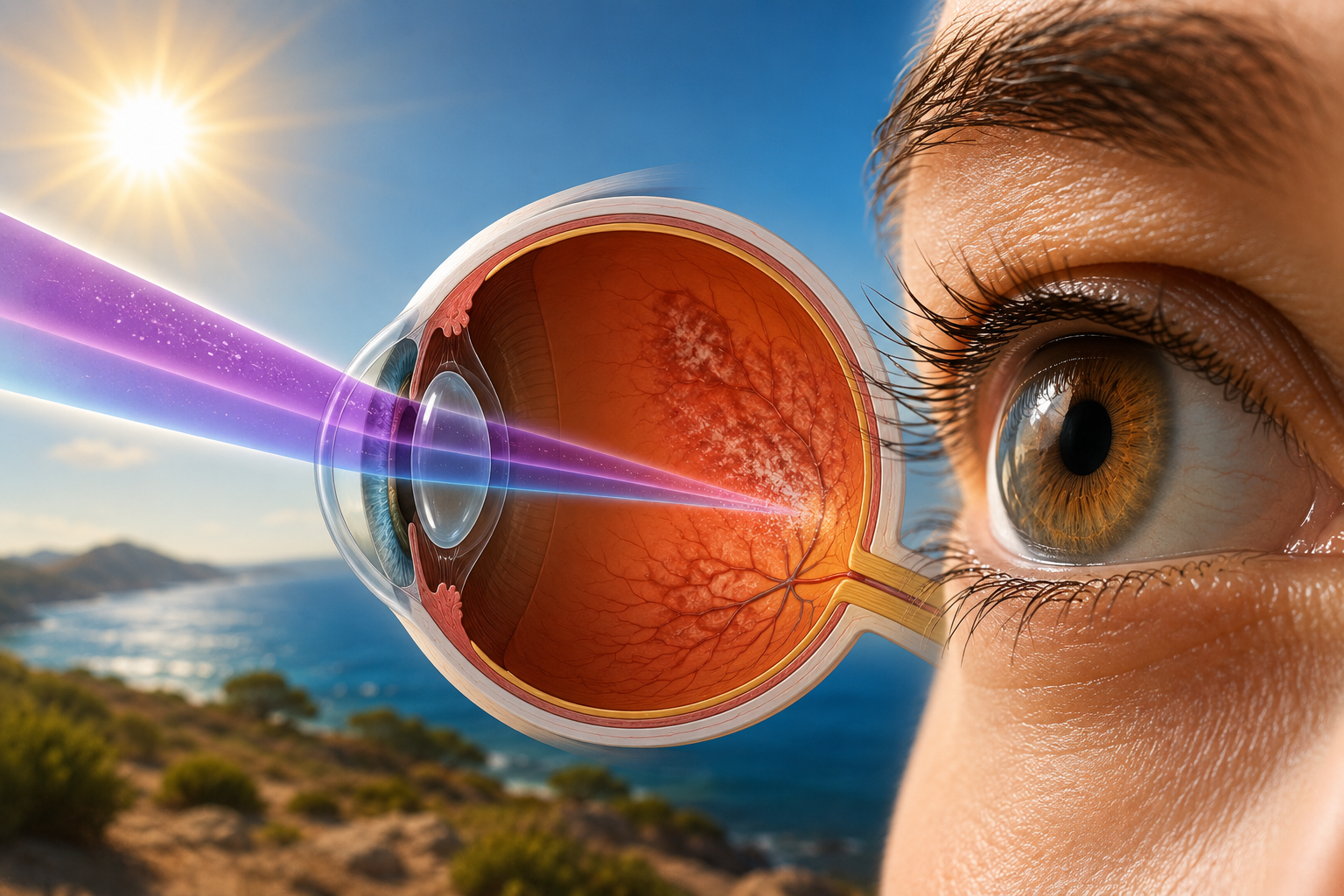
You apply sunscreen before heading out. Maybe you wear a hat. But your eyes? Most people give them almost no thought and UV radiation is doing quiet, cumulative damage every single time they step outside without proper protection.
The good news is that eye damage from UV is almost entirely preventable. The bad news is that most people are not doing nearly enough to prevent it.
Ultraviolet radiation comes in two main forms that reach the earth: UVA and UVB. Both penetrate the eye and cause harm in different ways, to different structures.
Short-term exposure can cause photokeratitis, essentially a sunburn on the surface of the eye. It is painful, causes temporary vision blurring, and is common after a day at the beach or on snow without eye protection. Most people do not connect the dots because symptoms appear hours after exposure.
Long-term, cumulative exposure is where the real damage builds up:
1: "I only need sunglasses when it is sunny.": Clouds do not block UV rays. Studies show that up to 80 percent of UV radiation still reaches your eyes on an overcast day. The sky may look grey, but your eyes are still being exposed. Think of UV like rain: you cannot see it, but it gets through regardless.
2: "Darker sunglasses give better protection.":The color or darkness of the lens has nothing to do with UV filtering. In fact, very dark lenses with no UV coating can cause more harm than wearing nothing at all. Here is why: dark lenses cause your pupil to open wider, letting in more light. If there is no UV filter, more UV enters the eye than it would in normal daylight. Always check the label for "UV400" or "100% UVA and UVB protection." That is the only number that matters.
3: "Kids do not need to worry about the sun and their eyes.": Children's eyes are actually more vulnerable than adults'. The lens inside a child's eye is clearer, which means it filters out less UV and allows more to reach the back of the eye. Some research suggests that a large proportion of a person's total lifetime UV eye exposure happens before the age of 18. Getting children into the habit of wearing proper sunglasses early is one of the most effective long-term protective measures available.
UV damage to the eyes is real, cumulative, and largely irreversible once it occurs. Unlike a sunburn on your skin, you will not feel it happening. And unlike skin, your eyes cannot regenerate or shed damaged cells the same way.
The solution is not complicated. A good pair of UV400 sunglasses and a hat cost less than the long-term consequences of not wearing them.
Protect your eyes with the same instinct you protect your skin. They deserve at least as much.
Prepared by ภญ ปุณยนุช อังคะนาวิน
Source: Eyes On Group, National Center for Biotechnology Information, CooperVision Live Brightly,
© 2026 Siammerx Co., Ltd
 TH
TH EN
EN CN
CN JAP
JAP AR
AR