168 จำนวนผู้เข้าชม |
27/05/2026
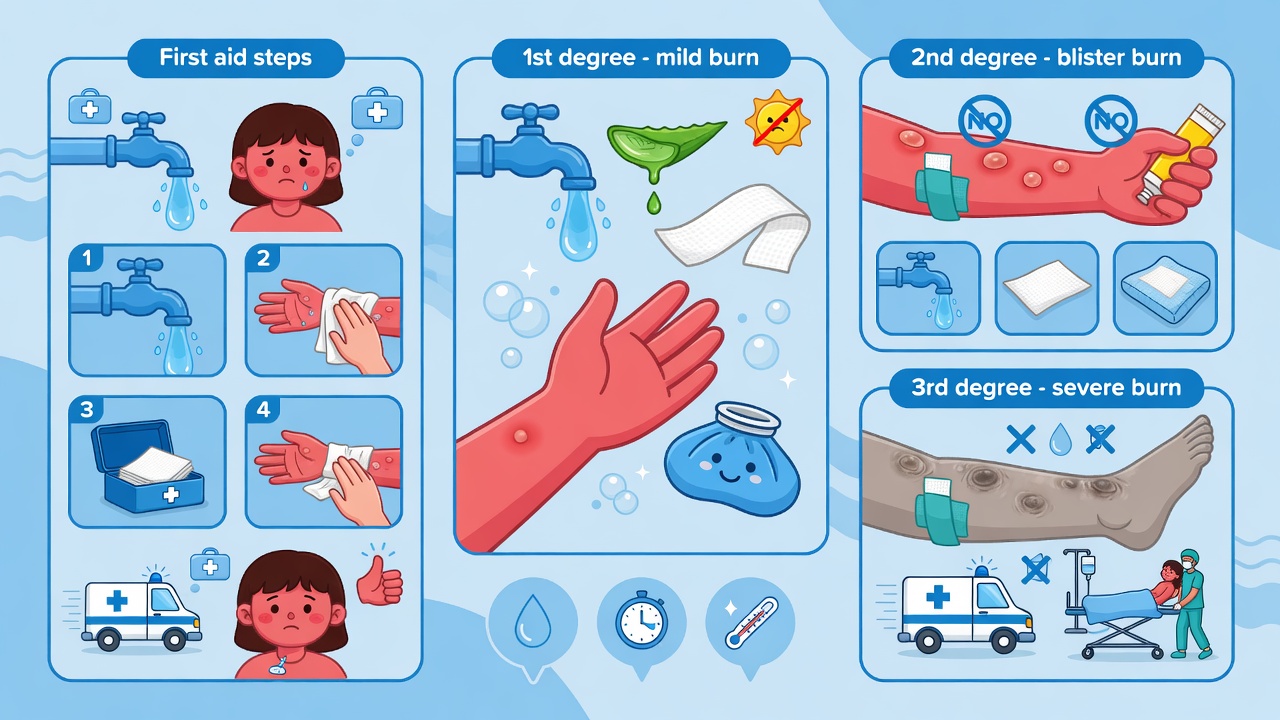
Warning: This information is intended for general educational purposes only and should not replace professional medical diagnosis or treatment. Some burns may be more severe than they appear externally, especially electrical burns and chemical burns.
Burns and scald injuries are common accidents that can occur in daily life, ranging from minor injuries to severe burns that may become life-threatening. Providing proper first aid early may help reduce the severity of tissue damage, lower the risk of infection, and support better wound healing.
However, burn severity can vary from person to person. This information is intended for basic educational purposes only and should not replace medical evaluation or treatment. If symptoms are severe or there is any uncertainty, medical attention should be sought immediately.
1. Stop the Burning Process Immediately
Move the injured person away from the heat source as soon as possible. If clothing is on fire, use the “Stop, Drop, and Roll” technique to extinguish the flames, or cover the flames with a thick blanket or cloth.
2. Remove Clothing and Jewelry Around the Burn
Carefully remove clothing or jewelry exposed to heat to reduce heat retention and prevent swelling.
Precautions:
3. Cool the Burn With Clean Water
Run clean, room-temperature water over the burn for approximately 10–20 minutes to help reduce tissue temperature and relieve pain.
Precautions:
4. Cover the Burn Temporarily
Use a clean cloth or a non-stick dressing to loosely cover the burn and reduce contamination from dirt and bacteria.
5. Chemical Burns
If the burn is caused by chemicals, rinse the area thoroughly with large amounts of clean water and avoid direct contact with the chemical substance.
To reduce the risk of infection and further tissue damage, avoid the following:
First-Degree Burn
A superficial burn affecting only the outer layer of skin.
Symptoms may include:
These burns often heal within a few days and may not leave scars.
Second-Degree Burn
A deeper burn involving part of the dermis (inner skin layer).
Symptoms may include:
These burns may take several weeks to heal, and some cases may result in scarring.
Third-Degree Burn
A severe burn involving all layers of the skin and possibly deeper tissues.
Symptoms may include:
These burns usually require prompt medical evaluation and treatment.
Fourth-Degree Burn*
A very severe burn that may extend into muscles, tendons, or bones. These burns carry a high risk of serious complications such as bloodstream infection or organ failure and require urgent specialized medical care. *The term “fourth-degree burn” is used in some medical references to describe burns extending into deeper tissues such as muscles or bones.
Scar formation depends on burn depth, severity, and proper wound care.
Methods that may help reduce scarring include:
For severe burns, doctors may consider additional treatments such as debridement or skin grafting.
Electrical burns are unique injuries that may be more dangerous than ordinary burns, even when the external wound appears small. Electrical current can travel through the body and damage internal tissues, organs, the heart, and the nervous system. Do not use water to extinguish fires involving electricity or touch electrical sources before the power has been disconnected, as this may increase the risk of electric shock. If high-voltage electricity is involved, wait for trained professionals or emergency responders and avoid approaching the area.
Thermal Burns
Thermal burns are commonly caused by external heat sources such as:
Damage usually begins at the skin surface and extends deeper depending on burn severity.
Electrical Burns
Electrical burns occur when electric current passes through the body, causing internal tissue damage from electrical energy and heat generated inside the body.
Although the external wound may appear minor, internal damage may affect:
Electrical burns may have “entry” and “exit” wounds, but the actual damage may occur deep inside the body.
For example:
For this reason, electrical burns should always be medically evaluated, even if the visible injury appears mild.
One serious complication of electrical shock is cardiac arrhythmia, which may become life-threatening.
Electrical current may also affect:
Some individuals may experience:
These symptoms may not appear immediately after injury, so close observation is important.
The most important rule when helping someone experiencing electrical shock is: do not touch the person directly until the electrical source has been disconnected.
Basic first aid steps:
Prepared by: พญ. นัทจิรา จียาศักดิ์
source: American Red Cross, World Health Organization, Mayo Clinic, Cleveland Clinic,
© 2026 Siammerx Co., Ltd
 TH
TH EN
EN CN
CN JAP
JAP AR
AR