 TH
 EN
 CN
 JAP
 AR
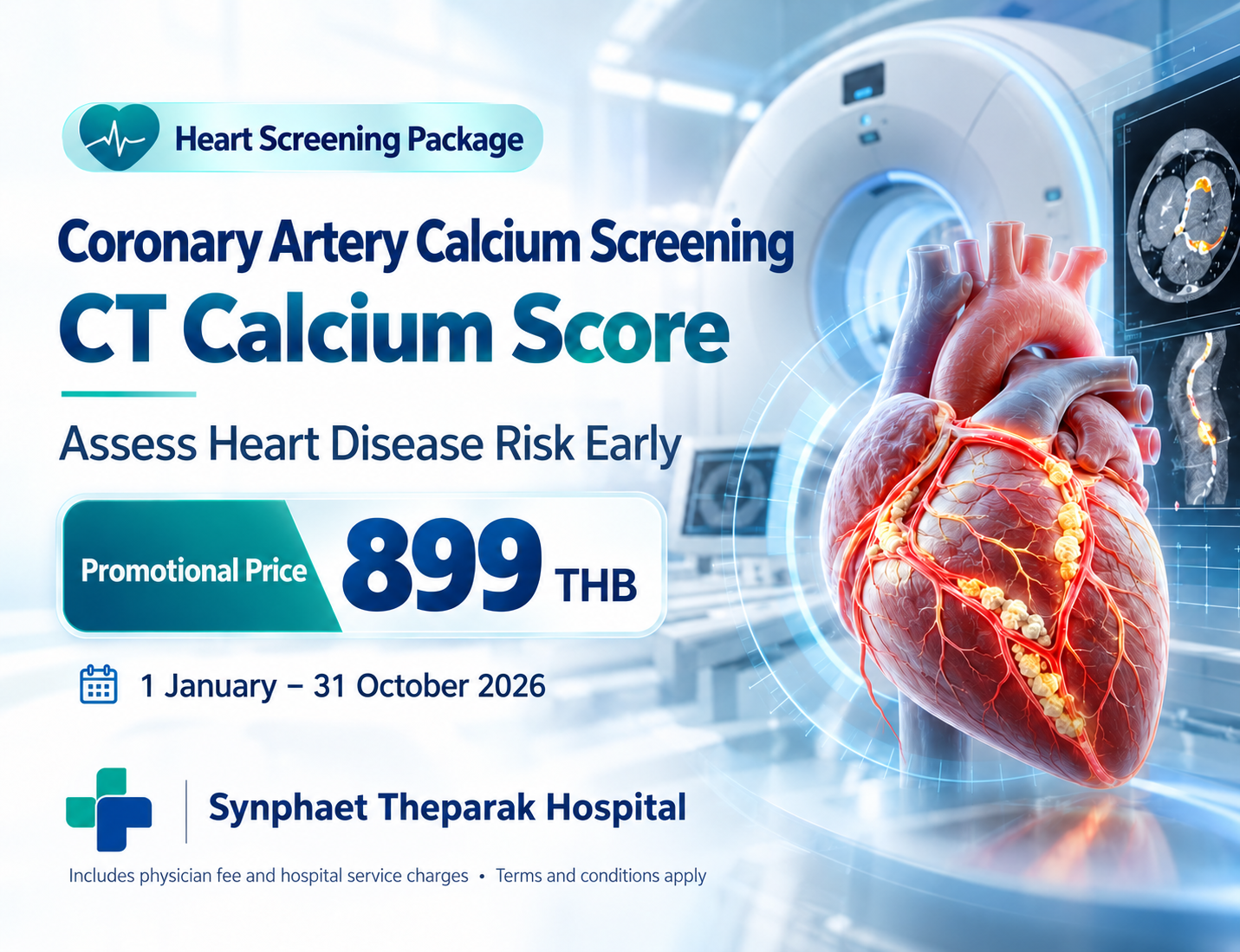


CT Calcium Score for Coronary Artery Calcium Detection – Promotional Price of THB 899
Coronary artery disease can begin developing before symptoms such as chest pain or other noticeable warning signs appear. Early risk assessment may therefore help physicians identify potential risk factors and develop a more appropriate plan for managing heart health.
Synphaet Theparak Hospital is offering a CT Calcium Score package to assess calcium buildup in the coronary arteries at a promotional price of THB 899, available from January 1 to October 31, 2026.
What Is a CT Calcium Score?
A CT Calcium Score, also known as Coronary Artery Calcium Scoring, is a test performed using a computed tomography, or CT scan, to measure the amount of calcium deposited in the walls of the coronary arteries.
The test result is reported as a numerical value known as the Calcium Score or Agatston Score. In general, a higher level of calcium buildup may indicate a greater degree of atherosclerosis and may be associated with an increased risk of cardiovascular disease.
However, a CT Calcium Score should not be used as the sole measure of heart health. Physicians will interpret the result together with other individual health information and risk factors, such as age, blood lipid levels, blood pressure, smoking status, and family history of heart disease.
How Can a CT Calcium Score Help?
A CT Calcium Score allows physicians to assess calcium buildup in the coronary arteries and use the findings as part of an overall evaluation of an individual's future risk of coronary artery disease.
The results may provide additional information for planning preventive measures and managing heart health. They may also help physicians determine how closely certain risk factors should be monitored or managed. The purpose of the test is therefore not only to determine whether calcium deposits are present, but also to provide greater insight into cardiovascular risks that may not yet be causing noticeable symptoms.
Who May Be Suitable for a CT Calcium Score?
Whether a CT Calcium Score is appropriate should be determined in consultation with a physician. The test may be considered for individuals with cardiovascular risk factors such as:
- Abnormal blood lipid levels
- High blood pressure
- Metabolic risk factors
- A family history of premature coronary artery disease
- No current symptoms but an assessed intermediate risk of heart disease
Feeling healthy, having no chest pain, or experiencing no unusual shortness of breath does not necessarily mean that there are no underlying cardiovascular risk factors. In its early stages, coronary artery disease may not produce obvious symptoms. An appropriate assessment may therefore help physicians identify potential risks earlier and develop a more targeted health management plan.
What Does a CT Calcium Score Mean?
A CT Calcium Score is reported as a numerical value. Different score ranges can be used as part of the assessment of the amount of calcium deposited in the coronary arteries.
| Score | Meaning and Risk Level |
|---|---|
| 0 | This generally indicates a very low level of risk, with little to no detectable calcium buildup in the coronary arteries. |
| 1–100 | A small amount of calcium buildup is detected. Greater attention should be given to lifestyle modifications, dietary management, and control of relevant health risk factors. |
| 101–400 | A moderate level of calcium buildup is detected. This may indicate an increased likelihood of coronary artery narrowing, and consultation with a cardiologist may be appropriate. |
| Above 400 | A high level of calcium buildup is detected, which may be associated with a higher risk of coronary artery disease. Appropriate medical evaluation is recommended. |
However, CT Calcium Score results should always be interpreted together with the individual's age, medical history, and other cardiovascular risk factors. Risk should not be determined from the Calcium Score alone.
Why Should People Without Symptoms Pay Attention to Heart Disease Risk?
One reason coronary artery disease deserves attention is that it may develop without noticeable symptoms during its early stages. Some individuals may continue their normal daily activities without experiencing chest pain or shortness of breath while still having risk factors such as high cholesterol, high blood pressure, or a family history of heart disease.
Feeling that you are “still healthy” does not necessarily mean that there are no hidden cardiovascular risks. With an appropriate medical assessment, physicians may be able to use the available information to develop a more personalized plan for managing cholesterol levels, blood pressure, diet, exercise, and other health-related behaviors according to each individual's level of risk.
What You Should Know Before Having a CT Calcium Score
A CT Calcium Score is intended to support the assessment of coronary artery disease risk. It should not be used as a substitute for diagnostic evaluation in an emergency situation. If you experience chest pain, shortness of breath, unusual sweating, or symptoms that may suggest reduced blood flow to the heart, you should seek immediate medical attention. You should not wait for a CT Calcium Score examination to evaluate these symptoms.
CT Calcium Score Promotion Details
Synphaet Theparak Hospital is offering a CT Calcium Score screening package.
- Promotional Price: THB 899
- Promotion Period: January 1 – October 31, 2026
- Location: Synphaet Theparak Hospital
* The promotional price excludes physician fees and hospital service fees, as well as any additional expenses that may arise if abnormalities are detected. Terms and conditions are subject to the hospital's policies, and prices may be subject to change.
Book Now / View DetailsWho Should Consider Discussing a CT Calcium Score With a Doctor?
If you have high cholesterol, high blood pressure, a family history of heart disease, or concerns about your risk of coronary artery disease, you may wish to consult a physician to determine whether a CT Calcium Score is appropriate for you, even if you currently have no noticeable symptoms.
Identifying cardiovascular risk at an early stage may help physicians develop a more appropriate and individualized plan for preventing and managing heart disease. When it comes to heart health, the most important risks are not always the symptoms we can feel today, but the underlying risks that have not yet produced noticeable signs.
Source: Synphaet Theparak Hospital